
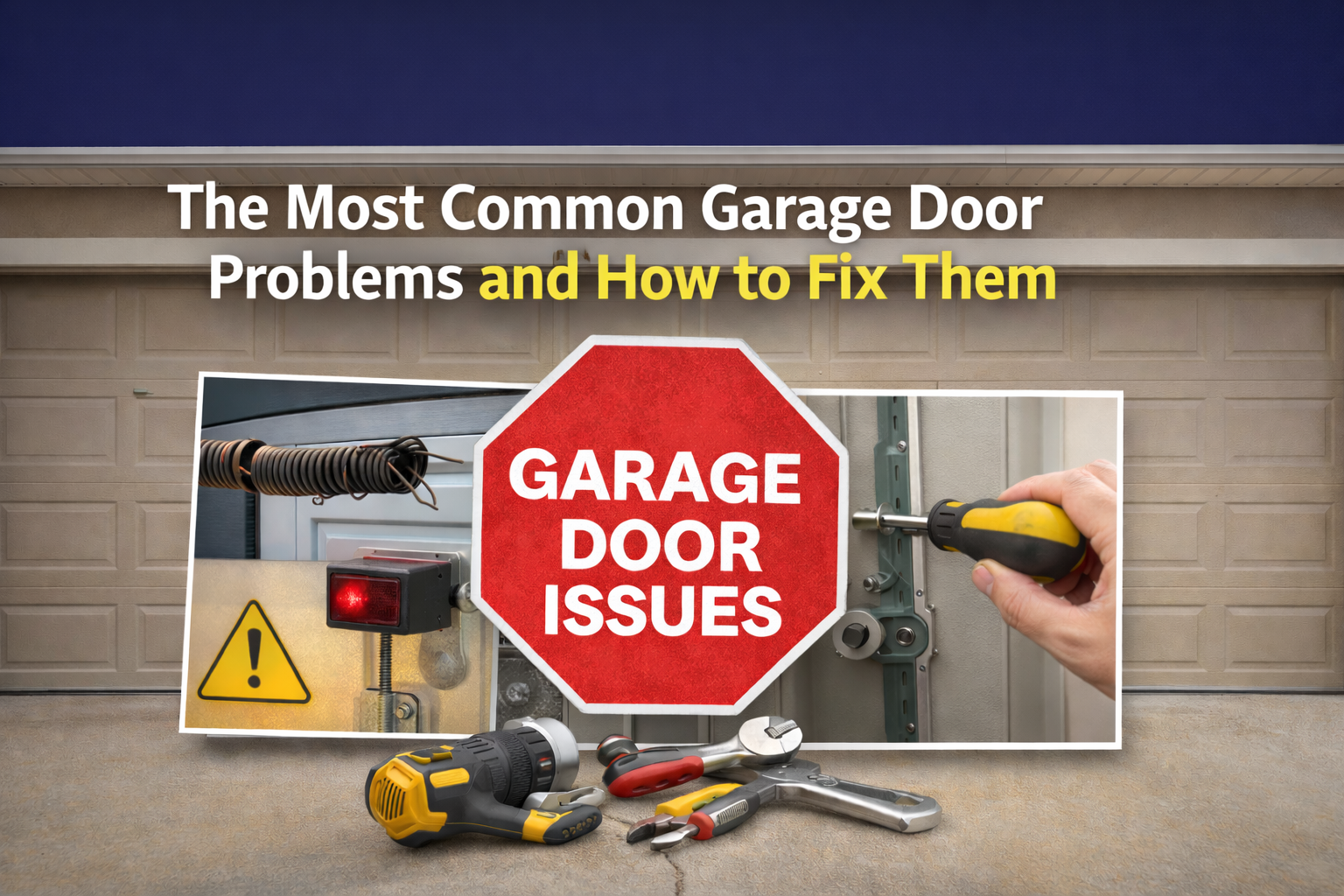
Your garage door is one of the hard-working, and sometimes over-worked mechanical systems in your home. It’s responsible for daily access, security, and convenience. Opening and closing hundreds of times a year. But like more operating systems with moving parts, wear and tear, and repairs are a common denominator. Sometimes that disrupts your routine.
In this guide, we’ll walk though the most common garage door issues homeowners face, what causes them and how you can fix them yourself- or when it’s time to call a professional.
One of the most common frustrating encounters we face is when the garage door won’t close, even though it opened just fine. Why this happens:
If your door still wont close safely or stops repeatedly, this may be a sign of garage sensor alignment or garage door opener issues, best handed by a pro.
Another common complaint is that the garage door won’t open the way, it may start to lift, then reserve or stop short. This can be caused by:
Caution: If your door reserves before fully opening multiple times, avoid forcing it, this can damage the opener or springs.
A smooth running garage door should operate fairly quietly. If your door is making noise – grinding, squeaking, rattling, or clunking, the culprit is often:
If noises persist after lubrication and tightening, it could indicate a deeper balance or spring issue, tasks equipped for a professional technician.
Sometimes the issue isn’t the door — it’s the signal. If your remote or wall control doesn’t work:
Many garage door problems can be resolved with simple troubleshooting, lubrication, and basic adjustments, but often involve springs, cables, tracks or opener mechanisms.
If you experience:
…it’s time to call in a trained garage door technician.
Your garage door protects your home and family and when it’s not operating correctly, it affects security, safety and convenience.
Don’t wait until a small problem becomes a big one. Schedule professional garage door inspection and repair to keep your door running smooth all year long.